Finding the Right GM Module the First Time
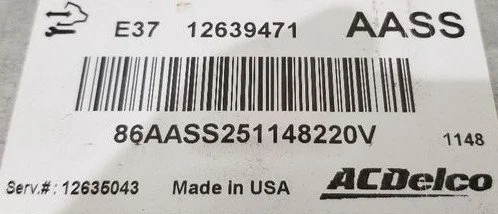
One of the first steps when cloning, replacing, or programming a module is properly identifying the correct module family along with the current hardware and software calibrations. In many cases, this information can be found on the label attached to the back of the module, which typically contains the Hardware Number, Service Number, and other identifying information.
However, there are situations where the label may be missing, damaged, faded, or unreadable. When this happens, additional methods may be required to accurately identify the module and verify compatibility before moving forward with programming, cloning, or replacement.
Before diving into the identification process, it’s important to understand the key differences between modules and the identifiers that separate one version from another.
What Is a Module?
In modern vehicles, a module is an electronic control unit that manages specific systems and functions within the vehicle. These modules act like small computers that receive information from sensors, process data, and control components such as the engine, transmission, anti-lock brakes, airbags, lighting, and more. Common examples include the Engine Control Module (ECM), Powertrain Control Module (PCM), Transmission Control Module (TCM), and Body Control Module (BCM). Because these modules store important vehicle information, software calibrations, and configuration data, proper identification is critical when diagnosing, programming, cloning, or replacing a module.
What is a Module Family?
A module family is a grouping or platform designation used by manufacturers to identify a specific generation or series of electronic control modules that share a common architecture, operating system, and general functionality. Examples of GM module families include the E38, E39, E67, and E90 ECM/PCM platforms.
Modules within the same family often use similar programming methods, communication protocols, connectors, and internal hardware designs, even though they may be used in different vehicles or engine combinations. Identifying the correct module family is important when cloning, programming, or sourcing replacements because it helps determine compatibility, supported features, and the tools or procedures required to service the module properly.
What is a Hardware Number?
A hardware number is a manufacturer-assigned identifier used to identify the physical version and design of a vehicle module. It helps determine the module’s internal electronics, processor type, connector configuration, and overall compatibility with specific vehicles and software calibrations.
When replacing or cloning a module, matching the hardware number is often important because different hardware revisions may not support the same operating systems, calibrations, or vehicle functions. In many cases, the hardware number can be found printed on the module label alongside the Service Number, part number, barcode, or serial number.
What is a Service Number?
A Service Number (Serv #) is a manufacturer-assigned identification number used to identify a specific module configuration, application, or replacement part. Unlike a hardware number, which identifies the physical design of the module, the Service Number is primarily used to match the module to the correct vehicle, engine, transmission, and software calibration requirements.
When sourcing a replacement module, the Service Number is often one of the most important numbers used to verify compatibility. Matching the correct Serv # helps ensure the replacement module supports the proper vehicle functions and reduces the risk of communication, programming, or drivability issues.
Visual Identification
The easiest way to identify a module is by visually locating the label attached to the back side of the unit. This label contains several numbers and identifiers that provide important information about the module, including the module family, hardware number, and service number.
The first identifier to locate is the module family, which is important when sourcing a compatible replacement module. In the example below, the module family is listed as “E37.” Next is the Hardware Number, shown as “12639471,” followed by the Service Number (Serv #), shown as “12635043.”
When requesting cloning services, we require this information before your order can be processed to help ensure proper module compatibility and reduce the chance of delays or incorrect replacements.